🔥 Key Takeaways
- Sangha Renewables, TotalEnergies, and Links Genco have launched a 19.9 MW Bitcoin mining facility in West Texas.
- The facility utilizes behind-the-meter solar power, reducing its carbon footprint compared to traditional mining operations.
- This project aims to create new revenue streams and support grid stability in the region.
- The initiative signals a growing trend of integrating renewable energy sources into Bitcoin mining.
Sangha Renewables Energizes 20 MW Bitcoin Mining Facility in West Texas: A Crypto Analyst’s Perspective
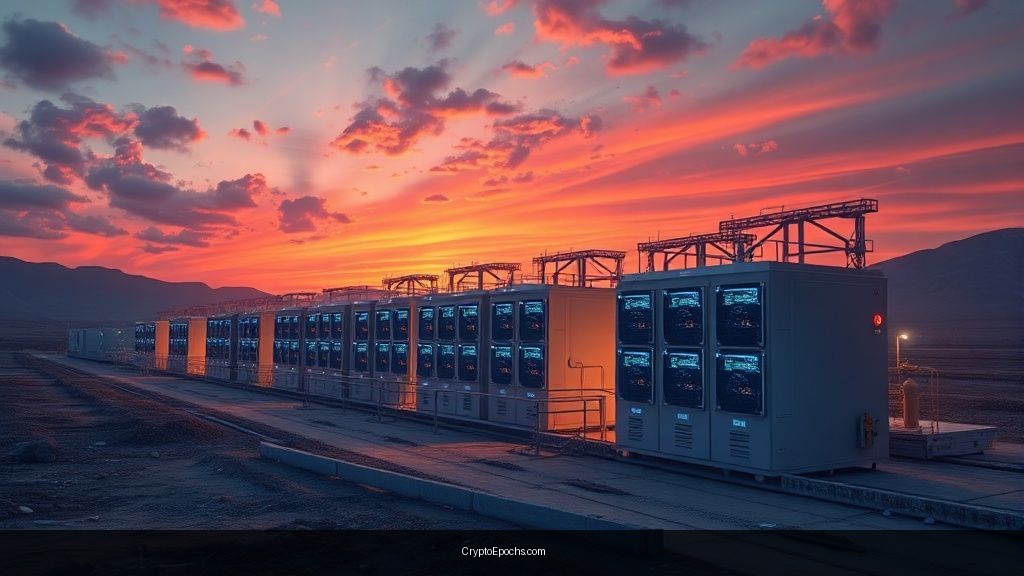
The recent announcement of Sangha Renewables, in collaboration with TotalEnergies and Links Genco, energizing a 19.9 MW Bitcoin mining facility in West Texas is a significant development for the cryptocurrency industry, particularly regarding its environmental impact. The facility’s reliance on behind-the-meter solar power represents a crucial step towards more sustainable Bitcoin mining practices.
Traditionally, Bitcoin mining has faced criticism for its high energy consumption and reliance on fossil fuels. This new facility directly addresses these concerns by integrating a renewable energy source. The “behind-the-meter” setup is particularly interesting, as it indicates that the facility is generating its own power and potentially reducing its reliance on the traditional power grid. This can lead to lower operational costs and a smaller carbon footprint.
The partnership between Sangha Renewables, a renewable energy company, TotalEnergies, a major energy player, and Links Genco, a firm with infrastructure expertise, underscores the growing interest in combining cryptocurrency mining with sustainable energy solutions. This collaboration could serve as a model for future mining operations seeking to reduce their environmental impact and leverage the potential of renewable energy.
Beyond the environmental benefits, the facility also aims to support grid stability and create new revenue streams. By strategically managing its energy consumption, the mining operation could potentially provide ancillary services to the grid, helping to balance supply and demand. Furthermore, the Bitcoin mined generates revenue that can be reinvested into further renewable energy projects and grid infrastructure improvements.
While this 20 MW facility is just one piece of the puzzle, it’s a powerful signal. It demonstrates that Bitcoin mining and environmental responsibility are not mutually exclusive. The success of this project could pave the way for larger-scale renewable-powered mining operations, contributing to a greener future for the Bitcoin network and the broader cryptocurrency ecosystem.
Read Also Epochs