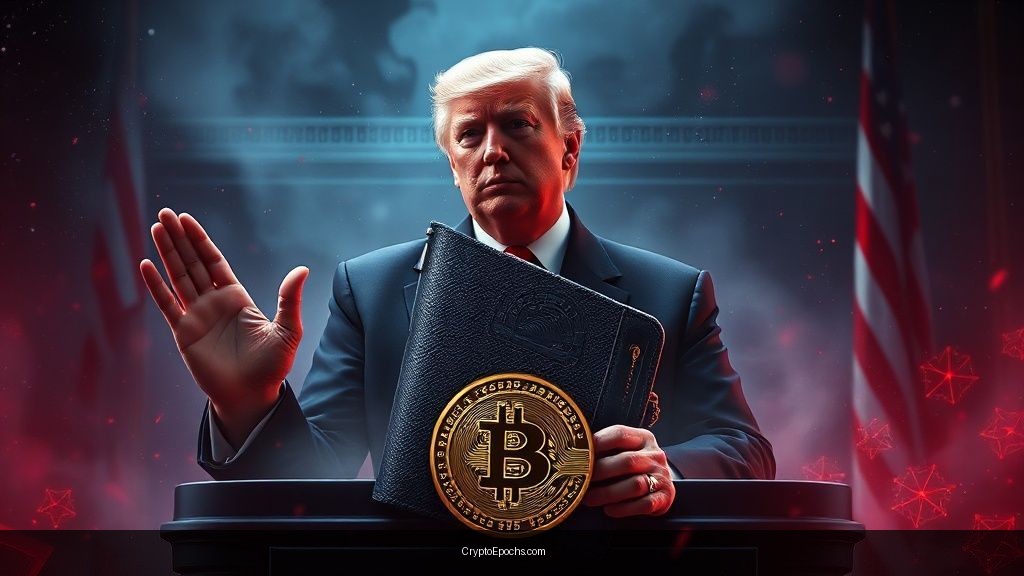
🔥 Key Takeaways
- Former President Trump acknowledges awareness of the Samourai Wallet case.
- Trump expresses openness to considering a potential pardon for Keonne Rodriguez, a founder of Samourai Wallet.
- The case highlights the ongoing debate surrounding privacy, AML compliance, and the regulation of crypto mixers.
- A potential pardon could have significant implications for the future of crypto privacy tools and their legal standing.
Trump’s Pardon Consideration for Samourai Wallet Founder: A Potential Watershed Moment
The crypto world is abuzz with the news that former President Donald Trump is reportedly considering a pardon for Keonne Rodriguez, one of the founders of Samourai Wallet. This development, stemming from a reporter’s question and Trump’s subsequent response, adds another layer of complexity to the already controversial Samourai Wallet case. The wallet has been at the center of a debate regarding the balance between user privacy and anti-money laundering (AML) regulations within the cryptocurrency space.
Samourai Wallet, known for its privacy-focused features like CoinJoin, has faced scrutiny from law enforcement agencies that allege its tools facilitated money laundering. The core argument revolves around whether providing privacy-enhancing tools inherently makes developers liable for the actions of users who might utilize those tools for illicit purposes. This case sets a potential precedent for how regulators treat crypto mixers and other privacy-focused technologies.
Impact on Crypto Privacy and Regulation
A pardon from Trump could have a profound impact on the landscape of crypto privacy. It could be interpreted as a tacit endorsement of the right to privacy in cryptocurrency transactions, potentially emboldening developers to create and deploy privacy-enhancing tools. More importantly, it would be a direct challenge to the current regulatory approach targeting crypto mixers, which some argue are essential for maintaining financial privacy in the digital age.
However, the pardon is not without its detractors. Critics argue that such a move would undermine law enforcement efforts to combat money laundering and other illicit activities facilitated by cryptocurrencies. They maintain that while privacy is important, it should not come at the expense of enabling criminal behavior. The debate highlights a fundamental tension within the crypto community: balancing the ideals of decentralization and privacy with the need for regulatory compliance and responsible innovation.
The Road Ahead
The possibility of a pardon introduces significant uncertainty. The legal and regulatory landscape surrounding crypto privacy tools remains unclear, and this case further complicates the situation. Regardless of the outcome, the Samourai Wallet case will continue to serve as a crucial point of reference in the ongoing discussion about the future of crypto privacy, regulation, and the role of developers in ensuring responsible use of their technologies. The industry will be watching closely to see how this unfolds, as the decision could set a precedent for future cases involving crypto mixers and privacy-enhancing tools.
Read Also Epochs