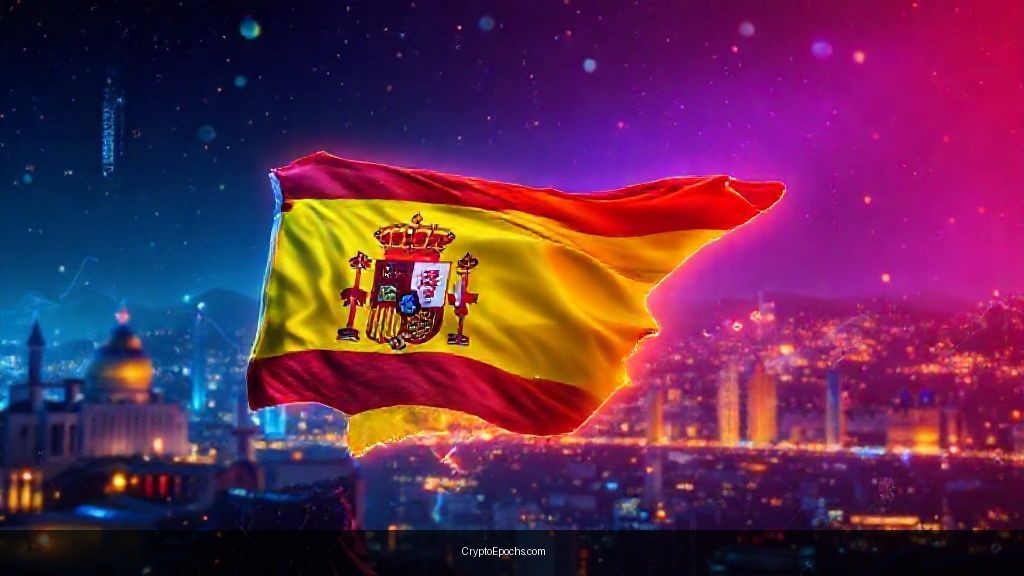
Spain Embraces EU Crypto Regulations: A New Era for Digital Assets
🔥 Key Takeaways
- Spain will implement the EU’s MiCA regulations starting July 2026, aligning with the region’s push for crypto oversight.
- The country will also enforce the DAC8 directive from January 1, 2026, requiring crypto exchanges to report user information.
- The move is expected to enhance investor protection, market integrity, and financial stability in the Spanish crypto market.
EU’s MiCA Regulations: A New Framework for Crypto
The European Union’s Markets in Crypto-Assets (MiCA) regulations aim to provide a comprehensive framework for the regulation of digital assets within the region. By implementing MiCA, Spain is taking a significant step towards creating a more secure and transparent crypto market. The regulations will cover various aspects, including the issuance, trading, and custody of digital assets.
Spain’s Crypto Landscape: A Hub for Innovation
Spain has been actively promoting itself as a hub for fintech and crypto innovation. The country’s decision to implement MiCA regulations demonstrates its commitment to providing a supportive environment for digital asset development while ensuring investor protection and market integrity.
According to a report by [source], Spain’s crypto market has been growing steadily, with an increasing number of exchanges and service providers setting up operations in the country. The implementation of MiCA regulations is expected to further boost investor confidence and attract more businesses to the region.
DAC8 Directive: Enhanced Reporting Requirements
In addition to implementing MiCA, Spain will also enforce the DAC8 directive from January 1, 2026. This directive requires crypto exchanges and service providers to report user information, including transactions and account data. The move is aimed at preventing tax evasion, money laundering, and other illicit activities in the crypto space.
The implementation of DAC8 will ensure that Spanish authorities have access to the necessary information to monitor and regulate the crypto market effectively. This will also enable the country to share information with other EU member states, enhancing cooperation and coordination in the region.
Conclusion
Spain’s decision to implement the EU’s MiCA regulations and DAC8 directive marks a significant milestone in the country’s crypto journey. As the region continues to evolve and mature, regulatory clarity and oversight will play a crucial role in shaping the future of digital assets. With these regulations in place, Spain is poised to become a leading hub for crypto innovation and adoption in the EU.
Read Also Epochs