🔥 Key Takeaways
- Spark is a layer 2 solution built using statechains, aiming to enhance scalability and efficiency in cryptocurrency transactions.
- The technology simplifies complex cryptographic concepts into an easy-to-understand analogy, making it accessible to a broader audience.
- By utilizing statechains, Spark enables the transfer of ownership without necessarily moving the actual asset, reducing the need for multiple transactions on the blockchain.
Introduction to Spark
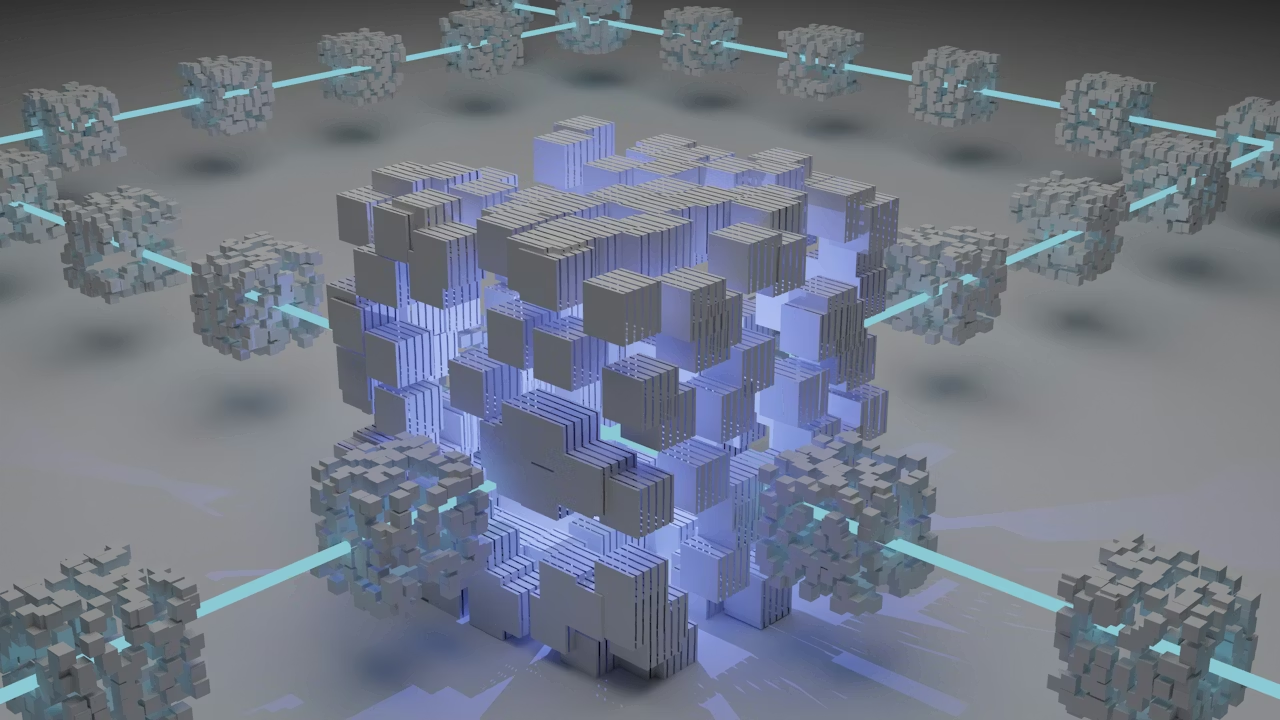
Spark, a cutting-edge layer 2 solution, has been gaining attention in the cryptocurrency space due to its innovative approach to scalability and efficiency. Built using statechains, Spark aims to simplify the process of transferring assets, making it faster and more cost-effective. But what exactly is Spark, and how does it work? In this article, we’ll delve into the world of Spark, explaining its underlying technology in a way that’s easy to grasp, even for those new to the crypto scene.
Understanding Statechains
At the heart of Spark lies the concept of statechains. Imagine you have a toy that you want to give to your friend. Normally, you would hand over the toy, and your friend would take it. But with statechains, it’s more like you’re giving your friend a special ticket that says they own the toy, without actually moving the toy itself. This ticket is like a digital receipt that proves ownership, allowing your friend to claim the toy whenever they want. This concept significantly reduces the need for multiple transactions on the blockchain, as the asset itself doesn’t need to be moved each time ownership changes.
How Spark Works
Spark leverages this statechain technology to facilitate the transfer of assets in a more streamlined manner. By using these digital receipts (or statechains), Spark enables users to transfer ownership of assets quickly and efficiently, without the need for the asset to physically move. This not only reduces transaction times but also lowers costs associated with each transaction, making it a more viable option for small transactions that would otherwise be too expensive to process on the main blockchain.
Conclusion
Spark represents a significant step forward in the development of layer 2 solutions, offering a simpler, more efficient way to manage asset transfers. By harnessing the power of statechains, Spark provides a scalable and cost-effective alternative to traditional transaction methods, paving the way for a more accessible and user-friendly cryptocurrency experience. As the crypto landscape continues to evolve, innovations like Spark will play a crucial role in shaping the future of digital transactions.
Read Also Epochs