Key Takeaways
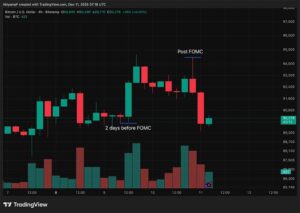
- Bitcoin experienced a sudden surge and subsequent reversal, resulting in a $100 billion fluctuation in market value within hours.
- Liquidations dominated trading, indicating a high level of market volatility.
- The event may have been triggered by a short squeeze, where a large number of short positions were forced to close, driving up the price.
Bitcoin’s Wild Ride: A $100 Billion Swing in Hours
Bitcoin, the world’s largest cryptocurrency, saw a dramatic and unexpected turn of events as its market value surged and then plummeted, adding and losing nearly $100 billion in a matter of hours. This extreme volatility has left investors and analysts scrambling to understand the cause of this sudden fluctuation. The rapid price movement was characterized by a sharp increase, followed by an equally swift reversal, resulting in a significant shift in the cryptocurrency’s market capitalization.
Market Volatility and Liquidations
The dominant factor in this event appears to be the high level of liquidations that occurred during the trading period. Liquidations happen when traders are forced to close their positions due to market movements that go against their bets, often leading to a cascade effect that amplifies price swings. The fact that liquidations played a major role suggests that the market was highly volatile, with many traders taking risky positions that ultimately could not be sustained.
Short Squeeze: A Possible Explanation
A potential reason behind this dramatic turn of events could be a short squeeze. A short squeeze occurs when a significant number of investors have bet against the price of an asset (in this case, Bitcoin), expecting it to fall. If the price instead begins to rise, these short positions become unprofitable, and investors are forced to buy back the asset to close their positions, which in turn drives the price even higher. This rapid buying can create a feedback loop, leading to a sharp increase in price until the short positions are covered. The subsequent reversal could then be attributed to profit-taking and the normalization of the market after the squeeze.
Read Also Epochs