🔥 Key Takeaways
- Bitcoin’s 4-year cycle dynamics remain intact despite a 2025 downturn, reigniting debates on its predictive power.
- Layer 1 blockchains are facing increased competition and evolving market dynamics, leading to a shift in the competitive landscape.
- Perpetual DEXs are gaining traction, driven by improved liquidity and user experience, challenging traditional centralized exchanges.
- Forecasting markets are emerging as a significant trend, leveraging blockchain technology for decentralized prediction platforms.
BloFin Research Analysis: Market Outlook 2026 Across Crypto Majors, Perp DEXs, and Forecasting Markets
The crypto landscape is continuously evolving, and the year 2026 is shaping up to be a pivotal period for major cryptocurrencies, decentralized exchanges (DEXs), and forecasting markets. BloFin Research’s latest analysis provides a comprehensive outlook on these sectors, highlighting key trends and potential developments. This article delves into the evolving market structure, focusing on Bitcoin, Layer 1 blockchains, perpetual DEXs, and forecasting markets.
Bitcoin: Broke the Pattern, Not the Cycle
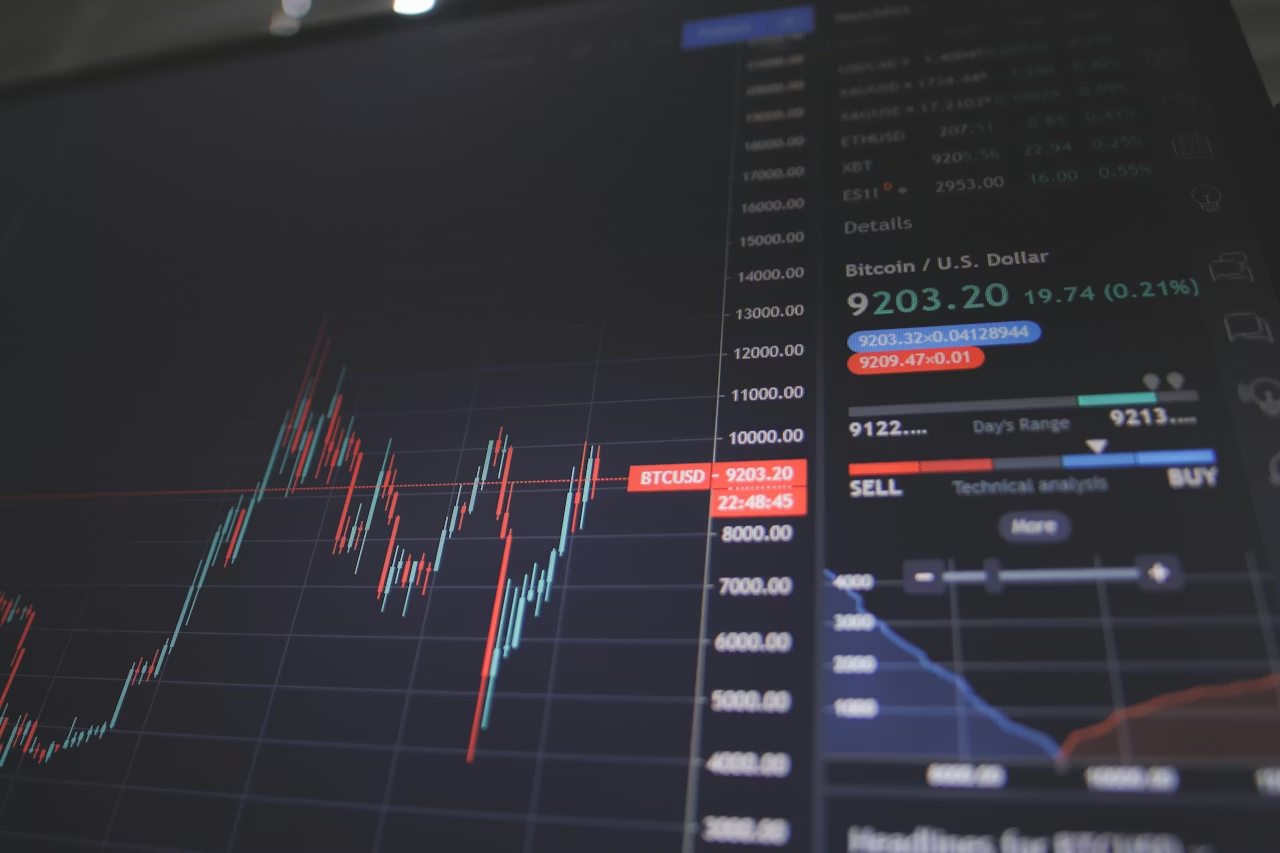
In 2025, Bitcoin presented an apparent contradiction that has reignited the debate around the validity of its 4-year cycle. Despite a significant downturn, the underlying cycle dynamics remain intact, suggesting that the long-term trend is still in play. This anomaly has led to a flurry of discussions among analysts and investors, with some questioning the reliability of the cycle and others reaffirming its predictive power.
The 4-year cycle, which is based on Bitcoin’s halving events, has historically been a reliable indicator of market trends. Each halving reduces the rate at which new bitcoins are created, leading to increased scarcity and, theoretically, higher prices. However, the 2025 downturn has introduced a new layer of complexity, as the market dynamics are influenced by a myriad of factors, including regulatory changes, technological advancements, and market sentiment.
Layer 1 Blockchains: Shifting Dynamics and Increased Competition
The competitive landscape for Layer 1 blockchains is undergoing significant changes. Traditional Layer 1s like Ethereum, Binance Smart Chain, and Solana are facing increased competition from newer entrants and cross-chain solutions. This shift is driven by the need for better scalability, lower transaction costs, and improved interoperability.
One of the key trends in this space is the rise of Layer 2 solutions, which are designed to enhance the performance and efficiency of Layer 1 blockchains. For instance, Ethereum’s transition to Ethereum 2.0, which includes the implementation of sharding and proof-of-stake (PoS), is expected to significantly improve its scalability and security. Similarly, other Layer 1s are exploring innovative solutions to address the challenges of high transaction fees and network congestion.
Perpetual DEXs: Gaining Traction and Challenging CEXs
Perpetual DEXs, which allow users to trade perpetual contracts in a decentralized manner, are gaining significant traction. These platforms offer several advantages over traditional centralized exchanges (CEXs), including improved liquidity, lower fees, and enhanced security. The decentralized nature of perpetual DEXs also ensures that users have full control over their funds, reducing the risk of hacks and fraud.
One of the leading perpetual DEXs, dYdX, has seen a surge in user activity and trading volume, highlighting the growing demand for decentralized trading solutions. As more users seek alternatives to centralized exchanges, the adoption of perpetual DEXs is expected to continue to rise, potentially disrupting the traditional trading landscape.
Forecasting Markets: Emerging as a Significant Trend
Forecasting markets, or prediction markets, are emerging as a significant trend in the crypto space. These platforms allow users to bet on the outcome of future events, ranging from political elections to economic indicators. By leveraging blockchain technology, forecasting markets offer a decentralized and transparent way to make predictions, reducing the influence of centralized entities.
One of the key benefits of forecasting markets is their potential to provide valuable insights and data for investors and traders. By aggregating the wisdom of the crowd, these platforms can offer more accurate predictions and help users make informed decisions. Additionally, the decentralized nature of these markets ensures that they are resistant to manipulation and censorship.
Conclusion
The crypto market in 2026 is poised for significant changes, driven by evolving market structures and emerging trends. Bitcoin’s 4-year cycle remains a key factor in the market, while Layer 1 blockchains are facing increased competition and innovation. Perpetual DEXs are gaining traction, challenging traditional exchanges, and forecasting markets are emerging as a new frontier in decentralized finance. As the crypto landscape continues to evolve, staying informed and adaptive will be crucial for investors and stakeholders.
Read Also Epochs