# Solana and Ethereum Can Coexist in Tokenization Race, Says Dragonfly VC
🔥 Key Takeaways
- Dragonfly VC’s Rob Hadick believes Solana and Ethereum can coexist in the tokenization race.
- Both blockchains have unique strengths—Ethereum for security and decentralization, Solana for speed and scalability.
- The tokenization market is expanding rapidly, leaving room for multiple blockchains to thrive.
- Interoperability solutions may further bridge the gap between competing networks.
## The Tokenization Race Heats Up
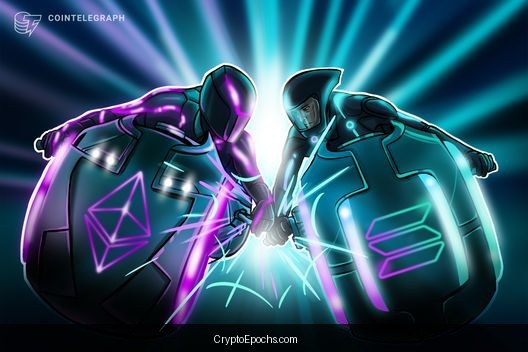
The battle for dominance in blockchain-based asset tokenization is intensifying, with Ethereum and Solana emerging as leading contenders. However, according to Rob Hadick, general partner at Dragonfly VC, the two blockchains don’t necessarily have to compete head-to-head—they can coexist and serve different market needs.
Hadick argues that Ethereum’s established ecosystem, security, and decentralization make it ideal for high-value institutional tokenization, while Solana’s speed and low transaction costs position it well for high-frequency, retail-focused applications.
## Why Ethereum Remains a Strong Contender
Ethereum has long been the go-to blockchain for decentralized finance (DeFi), nonfungible tokens (NFTs), and institutional-grade tokenization. Its robust smart contract capabilities and large developer community give it a significant advantage in trust and adoption.
However, Ethereum’s high gas fees and scalability challenges have pushed some projects to explore alternatives—opening the door for Solana and other Layer 2 solutions.
## Solana’s Role in the Tokenization Boom
Solana’s high throughput and low fees make it an attractive option for tokenizing assets that require fast settlement, such as real-time trading, gaming assets, and microtransactions. While it has faced network stability issues in the past, recent improvements have strengthened its position.
Hadick suggests that rather than a winner-takes-all scenario, the tokenization market is large enough for multiple blockchains to succeed, each catering to different use cases.
## The Future: Interoperability and Collaboration
As tokenization expands beyond cryptocurrencies to include real-world assets (RWAs) like real estate, stocks, and commodities, interoperability between blockchains will become increasingly important. Cross-chain bridges and Layer 2 solutions could help Ethereum and Solana complement rather than compete with each other.
Ultimately, the success of tokenization will depend on scalability, security, and user experience—factors where both Ethereum and Solana have distinct advantages.
—
Read Also Epochs