🔥 Key Takeaways
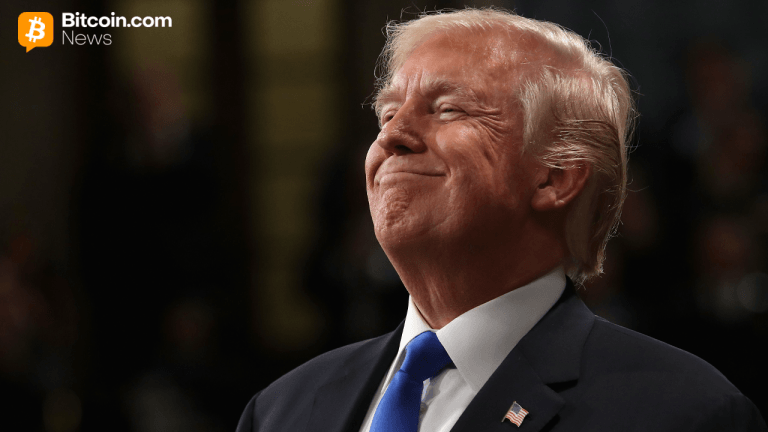
- President Trump celebrates the Dow’s all-time high, positioning himself as a key driver of economic success.
- The market’s performance raises questions about the reliability of economic indicators amid political narratives.
- Investors may need to consider the implications of market movements on cryptocurrency and alternative assets.
The Impact of the Dow’s Milestone on Economic Sentiment
U.S. President Donald Trump recently took a moment to revel in the record-breaking performance of the Dow Jones Industrial Average (DJIA), which reached a new all-time high. His assertion that he has built the “greatest economy” ever serves not just as a self-affirmation but as a strategic move in the ongoing political narrative leading up to upcoming elections. The DJIA’s surge can be interpreted as a reflection of investor confidence, yet it simultaneously complicates the broader economic discourse.
Why It Matters
The correlation between stock market performance and public sentiment cannot be overstated. In a climate where economic indicators often sway voter opinion, Trump’s celebration of the DJIA’s achievements is aimed at reinforcing his administration’s economic policies. However, while the stock market may be thriving, other economic indicators such as wage growth and employment stability tell a more nuanced story. This dichotomy raises important questions about the health of the overall economy and how it relates to cryptocurrency markets, which may react to fluctuations in traditional markets.
Market Dynamics and the Crypto Landscape
As the DJIA reaches new heights, investors are increasingly scrutinizing how such market performance impacts alternative assets like cryptocurrencies. With traditional financial markets displaying volatility and uncertainty, many are turning to crypto as a hedge against economic instability. The sentiment surrounding a booming stock market can lead to a temporary withdrawal of capital from crypto assets, but it can also ignite interest in decentralized finance (DeFi) as a way to navigate potential downturns in traditional markets.
Moreover, as Trump continues to tout the success of his economic policies, the question arises: will this lead to greater regulatory scrutiny on cryptocurrencies? The administration’s approach to financial technologies and digital currencies remains ambiguous, and any shifts in policy could significantly influence market dynamics.
In summary, while the celebration of the DJIA’s new peak underscores a moment of triumph for Trump, it also invites a deeper examination of economic realities and the potential ripple effects on the cryptocurrency market. As investors look for stable havens in times of uncertainty, the interplay between traditional equities and digital assets will become increasingly vital to monitor.
Read Also Epochs