🔥 Key Takeaways
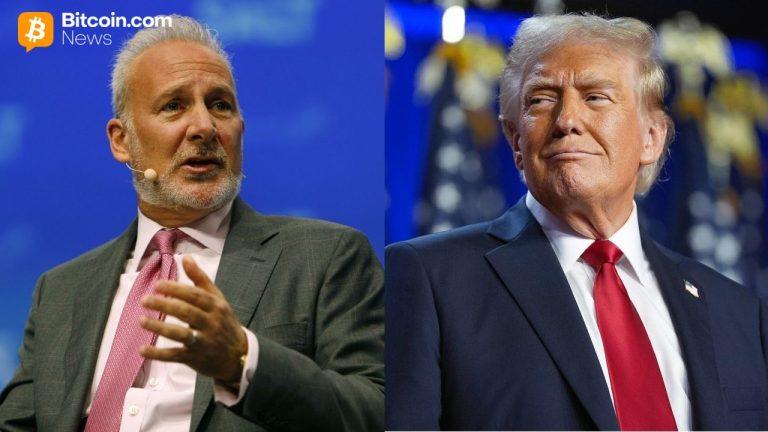
- Former President Trump criticized economist Peter Schiff, calling him a “loser” and a “jerk.”
- Schiff, a known Bitcoin skeptic, responded positively, challenging Trump to a debate on economic policies.
- The exchange highlights the ongoing tensions between traditional assets like gold and cryptocurrencies.
Analyzing the Tension Between Traditional Assets and Cryptocurrency
The recent exchange between former President Donald Trump and economist Peter Schiff has rekindled discussions about the philosophical and economic divides between traditional asset advocates and the proponents of cryptocurrencies. Trump’s derogatory remarks about Schiff not only underline a personal feud but also reflect broader market sentiments regarding gold and Bitcoin.
Why It Matters
This incident is emblematic of the polarizing views that exist within financial markets today. Trump, an advocate of traditional finance, views Schiff—who has been vocally critical of Bitcoin—as a representative of outdated perspectives. In contrast, Schiff’s willingness to engage with Trump demonstrates a strategic pivot to leverage controversy for visibility. Such exchanges can influence public sentiment and market dynamics, potentially affecting the pricing and adoption rates of cryptocurrencies versus gold.
The Broader Context
Peter Schiff is no stranger to controversy. He has been a vocal critic of Bitcoin, often describing it as a speculative bubble. His views align with his long-standing advocacy for gold as a safe-haven asset, particularly in times of economic uncertainty. On the other hand, Trump’s comments may resonate with a significant portion of his supporters who view cryptocurrencies as a threat to traditional financial systems. This friction could have implications for investor behavior and policy discussions around regulation in the crypto space.
Moreover, the invitation for a debate on economic policies reflects an intriguing trend where public figures are increasingly engaging with one another over platforms that reach a broad audience, potentially influencing market perceptions. As the crypto landscape continues to evolve, discussions like these may shed light on the legitimacy and future of digital currencies, particularly as they vie for legitimacy against established assets.
In conclusion, the ongoing dialogue between figures like Trump and Schiff illustrates the larger narrative at play in the financial world—one where traditional assets and cryptocurrencies are in a constant state of negotiation for dominance in investment strategies. As the crypto market matures, such high-profile exchanges will likely continue to shape public perceptions and investment decisions.
Read Also Epochs