🔥 Key Takeaways
- Beeple’s latest installation merges art with technology, challenging societal norms.
- The work critiques algorithmic control and emphasizes the role of AI in art.
- This installation may signify a new trend in the intersection of crypto and physical art.
Art, Technology, and the Crypto Narrative
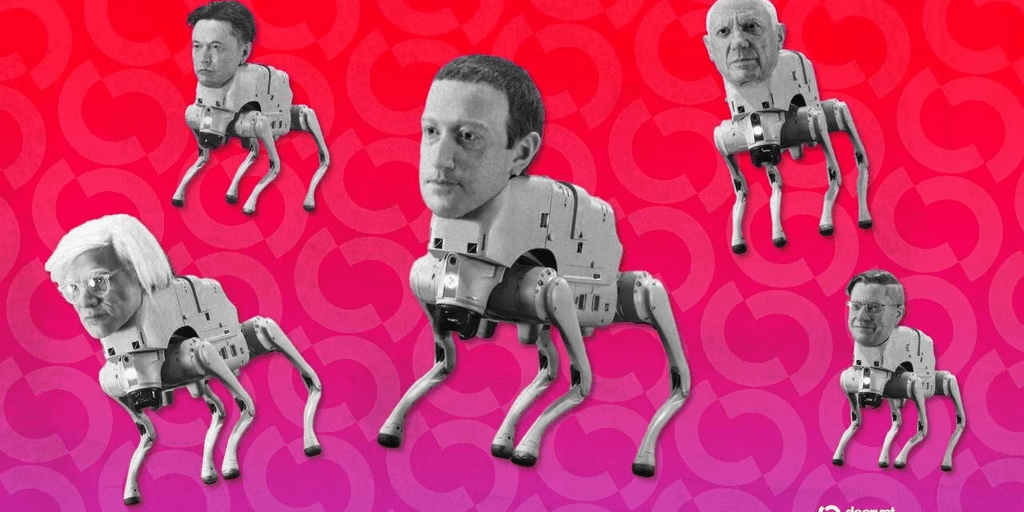
Renowned digital artist Beeple has once again pushed the boundaries of creativity and technology with his latest installation at Art Basel. Collaborating with figures like Elon Musk, Mark Zuckerberg, and even the late Andy Warhol, Beeple has created a provocative piece that features robotic dogs with the heads of these influential personalities—each capable of “pooping” NFTs. This audacious blend of satire and artistry serves as a critique of our current relationship with algorithmic control and the implications of machine perception in a digital age.
Why It Matters
The installation is not merely an artistic endeavor; it represents a broader commentary on the pervasive influence of technology in our lives. By depicting characters who embody both innovation and controversy, Beeple invites viewers to question the algorithmic biases that shape our understanding of the world. As the art world increasingly embraces digital assets, works like these bridge the gap between the physical and virtual realms, suggesting that the future of art may be inexorably tied to blockchain technology. Such installations may encourage artists to explore new formats and engage with audiences in ways that challenge traditional art narratives.
The Convergence of Art and Crypto
This installation highlights a significant trend: the merging of art, technology, and cryptocurrency. As digital art continues to gain prominence, installations that engage with on-chain memories could redefine how we perceive ownership and authenticity in art. By incorporating NFTs into the narrative, Beeple is emphasizing the shift towards a decentralized art market, where artists can retain control over their work and its distribution. This paradigm shift not only empowers artists but also elevates the role of collectors and audiences, who can now partake in the creation and dissemination of art.
Moreover, the playful nature of the installation, with its whimsical robotic dogs, serves to demystify the often serious and abstract discussions surrounding technology and art. It encourages a broader audience to engage with the concepts of AI and blockchain, potentially fostering a new generation of creators and thinkers in the crypto space.
Looking Forward
As the intersection of art and technology continues to evolve, we can anticipate more innovative installations that challenge societal norms and provoke thought. Beeple’s work at Art Basel is just the beginning, and it sets a precedent for future artists to explore the implications of technology in their work. The future of art lies not just in its creation but in how it interacts with the digital landscape and the audience’s evolving understanding of value, ownership, and creativity.
For further insights on the evolving relationship between art and technology, check out articles from ArtNews and Forbes.
Read Also Epochs